Historic Centre
“I only needed to take a step inside of the wall to see her [to Cartagena] in all its grandeur to the light mauve of the six in the evening, and I could not repress the feeling of having been born again,” wrote Gabriel Garcia Marquez, in his autobiography Live to Tell it.
The streets of the neighborhoods of San Diego and Gethsemane are surrounded by a wall of military-colonial, built four centuries ago. Its mission was to prevent invasions of navigators English and French. Its original shape remained almost intact to the present day, leaving a defence to become a door into yesterday.
The streets Garage Hobo, The Curacy of Santo Domingo, The Seven Infants, The Tumbamuertos and other more in the neighborhood of San Diego are full of colonial architecture, churches, theatres, convents, colleges, and houses that survive the passage of time and of the people. It is not only about walls, windows, and balconies, but also of stories that are discussed to be of historical events or legends mythologized.
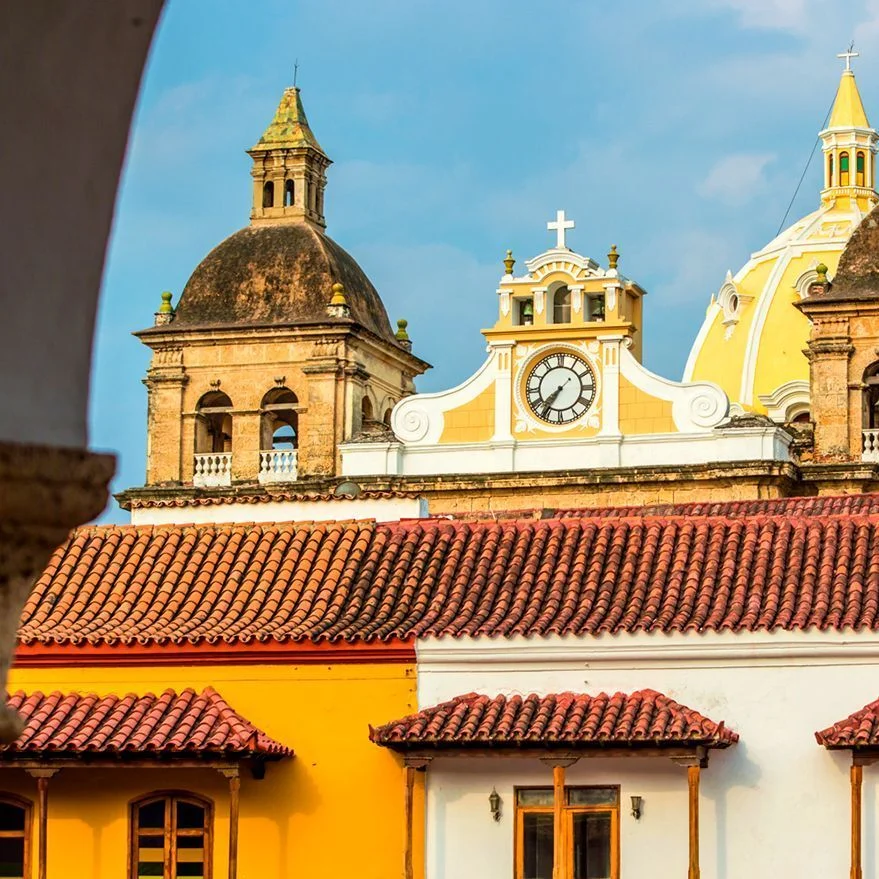
In 1666, in San Diego, began the construction of the Church of Santo Tomas de Villanueva, today known as Santo Toribio. By this time, the cloister was part of the everyday life of the high class cartagena. Housed beautiful, almost divine, religious images, and a beautiful baroque altarpiece.
27 April 1741 the bullet of a gun came out of a pirate ship and entered by the gate of the Church of Santo Toribio up to the feet of the priest, without causing damage only to scare, according to the chronicles written at the time.
When walking through this neighborhood all the senses delight; look, listen, feel and live.

The other side of the Center
The outskirts of the Holy Trinity. That was the name of the neighborhood of Gethsemane at the time that the priest of Santo Toribio it occurred to him to save the cannonball as the proof of a miracle in the new world.
Gethsemane is the first popular neighborhood of Cartagena. The epicenter of this neighborhood is the Plaza de la Trinidad, it is composed by a church that bears the same name built three centuries ago; it has sculptures that allude to the freedom of the enslaved; and is surrounded by houses, multicolor, that, on the whole, make the streets of Gethsemane in a gallery urban art.
In the celebrations of the Independence of Cartagena, which was carried out from 11 to 15 November, this place is a feast multidimensional. Year after year, The Trinity, is the stage of dance groups and music that encourage the celebrations of independence.
It is not a coincidence. In this same square, in 1811, the inhabitants of Gethsemane, they began to bring the freedom for the absolute separation of the Spanish monarchy.
Since then, late in the afternoon, locals and tourists are made with the square, under the shade of an imposing façade yellow of the Church of the Trinity. Other streets have their own charm; there are breweries, fashion studies, restaurants, and popular music.